

Dental Crowns in Mississauga
Book an Appointment →Call 905-567-6891Open 7 days, including evenings and Sundays. Private insurance, CDCP or no insurance, everyone is welcome.


Dental crowns in Mississauga protect and restore teeth that are cracked, worn down, heavily filled or weakened after a root canal. A crown is a tooth-shaped cap that covers the damaged tooth completely, restoring its shape, strength and appearance, and crowns also sit on top of dental implants. At River Run Dental Centre, our dentists match each crown to the colour of your natural teeth.
We’re open 7 days a week, including evenings and Sundays.
Benefits of a Dental Crown
A tooth crown lets you keep a tooth that might otherwise break or need to come out. It takes the chewing force, so the tooth underneath doesn’t have to.
Protects a cracked or weak tooth
Restores a tooth after a root canal
Natural-looking colour and shape
Can last 10 to 15 years or more

How a Dental Crown Is Made and Fitted
Most crowns take two visits, about two weeks apart.
Preparing the Tooth
We numb the tooth, remove any decay and shape it so the crown fits over it.
Scan and Temporary Crown
We take a scan or impressions for the lab and fit a temporary crown to protect the tooth.
Fitting Your Crown
At your second visit, we check the fit, bite and colour, then cement the final crown in place.
Ask us whether a same-day crown is an option for your tooth. A new crown should feel like your own tooth within a few days. If your bite feels high or the tooth is still sensitive after a week, call us and we’ll adjust it.
Why Choose River Run for Dental Crowns
A crown should fit well, look natural and last. We take care with every step, from shaping the tooth to matching the shade, and explain your material options and costs before we start.
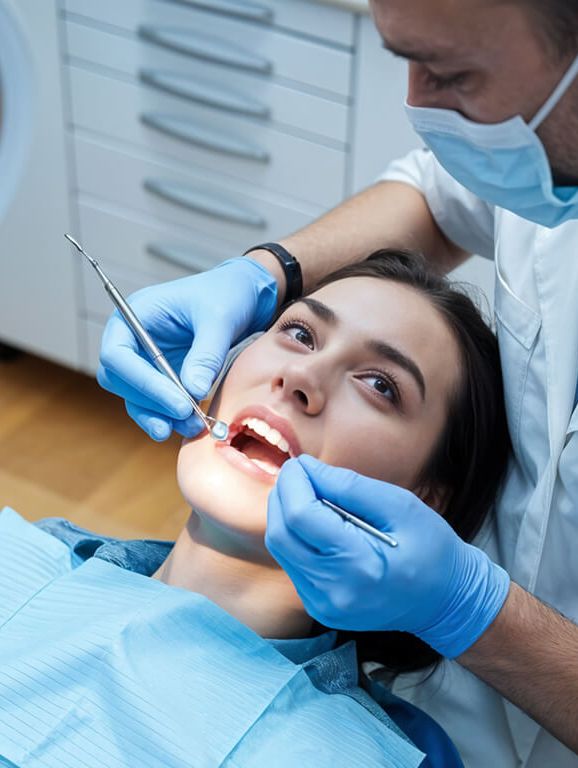
Careful Fit and Colour Match
We plan each crown to fit your bite and blend in with your natural teeth.
- Evening and Sunday appointments
Clear Costs, CDCP Accepted
We explain the cost of each crown material, and what your plan covers, before treatment.
- Canadian Dental Care Plan accepted
Dental Crown Cost in Mississauga
Dental crown cost in Mississauga depends on the material, the tooth, and whether you need a root canal, post or build-up first. Porcelain and zirconia crowns look the most natural. Gold and metal crowns are very strong and are sometimes used on back teeth. The average cost of a dental crown in Ontario varies from clinic to clinic. When you compare one dental crown price with another, check whether the temporary crown and final fitting are included in the crown fees.
With insurance: most workplace plans cover crowns as major work, often at a lower rate than basic care, and some plans ask for a pre-estimate first. We’ll check your coverage.
Without insurance: we’ll tell you how much a dental crown costs before we start. If you’re looking for a cheap or affordable tooth crown, ask us to compare materials. A well-made crown usually costs less over time than one you have to replace early.
The Canadian Dental Care Plan (CDCP) covers crowns for eligible patients, with pre-authorization and within set limits.
Insurance Accepted
We Direct Bill Your Dental Insurance
Pay only your share at your visit. We accept most private dental plans, the Canadian Dental Care Plan and several government programs, and we offer payment plans if you don't have insurance.
- Sun Life
- Manulife
- Canada Life
- Green Shield
- Blue Cross
- Desjardins
- Beneva
- Industrial Alliance
- Empire Life
- Equitable Life
- Johnson / belairdirect
- Cowan
- ClaimSecure
- Express Scripts Canada
- TELUS Health
- CDCP
- Healthy Smiles Ontario
- ODSP
- NIHB
Related reading: Broken tooth: what to do right away and Root canal treatment: signs, steps and recovery.
Types of Dental Crowns
The right crown depends on where the tooth is and how much chewing it has to handle.
- Porcelain crowns: the most natural look, often used for front teeth.
- Zirconia crowns: strong and tooth-coloured, a good choice for back teeth that do the heavy chewing.
- Porcelain fused to metal: a metal base for strength, with porcelain on the outside.
- Gold crowns: very durable and gentle on the opposite teeth, but not tooth-coloured.
- Implant crowns: attached to a dental implant to replace a missing tooth.
Crowns also hold a dental bridge in place. For front teeth that only need a cosmetic change, veneers or dental bonding may be a gentler option, because less of the tooth is reshaped.
Dental Crowns for Kids, Adults and Seniors
Crowns are used at every age.
- Children: a stainless steel crown can protect a baby molar with a large cavity until it falls out naturally.
- Adults: crowns repair cracked, worn or heavily filled teeth, and protect back teeth after a root canal.
- Seniors: older teeth with large, failing fillings can often be saved with a crown instead of being pulled.
Look after a crown the same way as your natural teeth: brush twice a day, floss, and keep up with checkups, since the tooth underneath can still get a cavity at the edge.
Book Your Dental Crown Consultation in Mississauga
We'll check the tooth, explain your crown options and give you the cost before any treatment. Evening and Sunday appointments available. Find us at 11-1525 Bristol Rd W, near Creditview Rd.
Dental Crowns in Mississauga: Frequently Asked Questions
It depends on the material and the tooth, and on whether you need a root canal or build-up first. Porcelain and zirconia crowns cost more than a metal crown on a back tooth. We explain the cost before we start, and most insurance plans and CDCP cover part of it.
Usually 10 to 15 years, and often longer with good care. Grinding your teeth, chewing ice and skipping checkups can shorten its life.
The tooth is numbed while we prepare it, so you should feel pressure but not pain. It may be a little sensitive for a few days afterwards, which usually settles on its own.
Most crowns take two visits, about two weeks apart, while the lab makes your crown. Ask us whether a same-day option suits your tooth.
A filling repairs part of a tooth. A crown covers the whole tooth. We suggest a crown when a tooth is too damaged or weak to hold a large filling safely.
Porcelain looks more natural, so it's usually chosen for teeth you can see. Metal and gold crowns are very strong and last well on back teeth. Your dentist will recommend what suits the tooth and your budget.
Most workplace plans cover crowns as major work, often at a lower rate. The Canadian Dental Care Plan covers crowns for eligible patients with pre-authorization. We'll check your coverage before treatment.
Trusted Sources on Dental Crowns
Want to read more? These health organizations explain dental crowns in plain language:
- Canadian Dental AssociationGuide to dental crownscda-adc.ca ↗
- MedlinePlusExplanation of dental crownsmedlineplus.gov ↗
- Cleveland ClinicWhy you might need a crownmy.clevelandclinic.org ↗
- American Dental AssociationOverview of dental crownsmouthhealthy.org ↗
- Government of CanadaCanadian Dental Care Plancanada.ca ↗
Related Services
Crowns often work together with these treatments:
- Root canal treatment to save an infected tooth before it’s crowned
- Dental implants topped with a crown to replace a missing tooth
- Dental bridges held in place by crowns on neighbouring teeth
- Dental fillings for smaller cavities that don’t need a crown