


 Written and medically reviewed byDr. Rajesh AroraGeneral Dentist · Updated
What Is Root Canal Treatment?
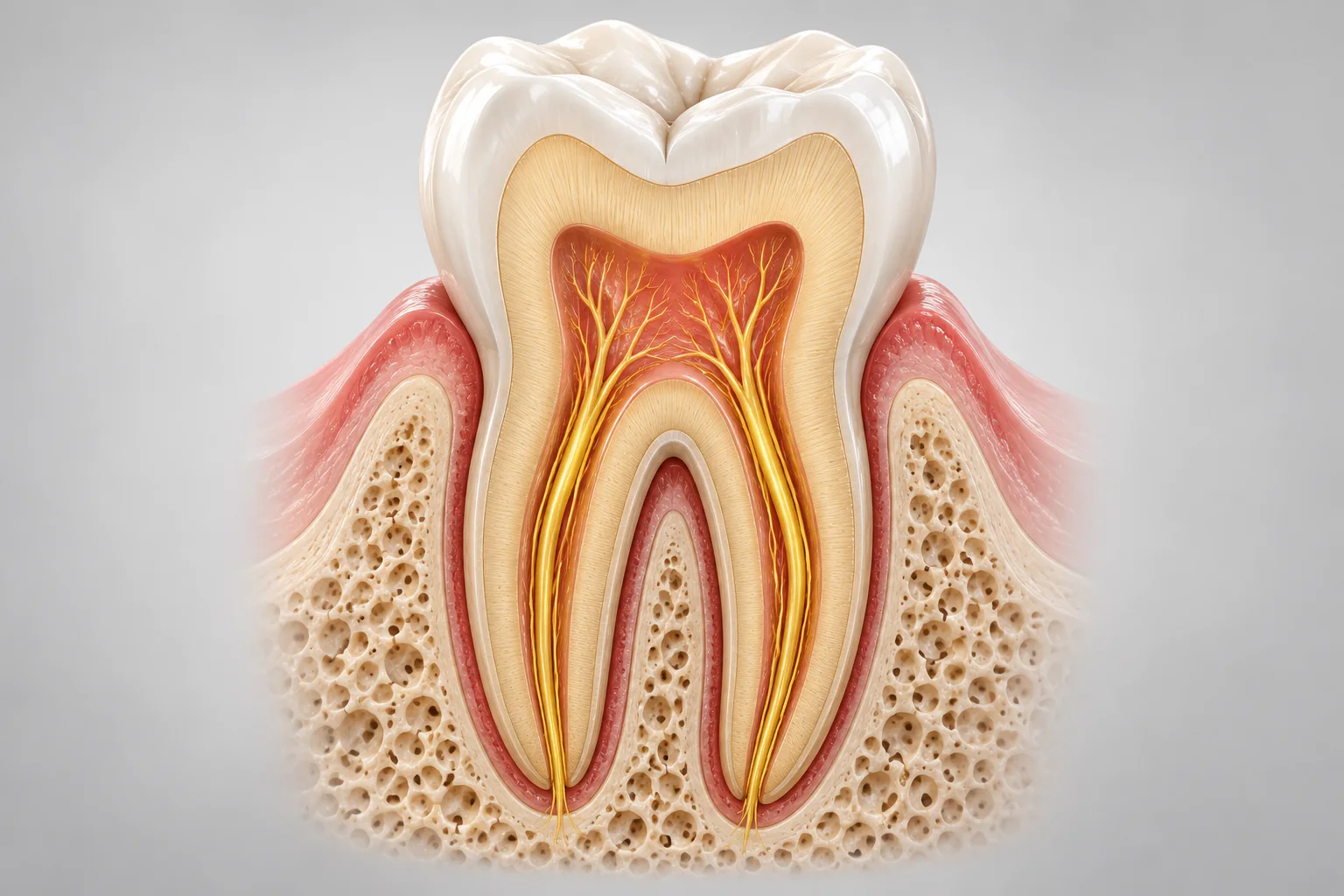
Inside every tooth is a soft core called the pulp. It holds the nerve and blood vessels and runs down through thin channels in the roots, called root canals. When bacteria reach the pulp, it gets inflamed or infected and can’t heal on its own.
Root canal treatment removes that damaged pulp and seals the tooth so the infection can’t come back. The Canadian Dental Association on root canal treatment puts it simply: “When the nerve of your tooth becomes infected, a successful root canal treatment lets you keep the tooth rather than having to pull it out.”
According to the American Dental Association (MouthHealthy) on root canals, the pulp can become infected after “a deep cavity”, “a cracked or fractured tooth” or an “injury to the tooth (even if there’s not a visible crack or chip).” Repeated dental work on the same tooth can also disturb the pulp.
Signs You Need a Root Canal
Some infected teeth hurt a lot. Others give almost no warning. Watch for:
- A toothache that lingers or throbs, or wakes you at night
- Pain when you bite or press on the tooth
- Sensitivity to hot or cold that stays after the food or drink is gone
- Swelling in the gum or face near the tooth
- A small pimple-like bump on the gum
- A tooth that has turned darker than its neighbours
Left untreated, the ADA notes, “you will often feel pain and swelling and an abscess may form inside the tooth and/or in the bone around the end of the root of the tooth.” The CDA adds that “an abscessed tooth may cause pain and/or swelling. Your dentist may notice the infection from a dental x-ray or from other changes with the tooth.” That second point matters: a tooth can be infected without hurting, which is one reason regular checkups and X-rays help.
What Happens During a Root Canal, Step by Step
- Diagnosis: your dentist examines the tooth and takes X-rays to confirm the pulp is the problem. We use 3D (CBCT) scans to plan complex cases.
- Freezing: the tooth and the area around it are numbed completely before anything else happens.
- Cleaning: a small opening is made in the top of the tooth and the infected pulp is removed. In the CDA’s words, the dentist works by “cleaning and enlarging the root canal system.”
- Disinfecting and shaping: the canals are shaped and rinsed to clear out bacteria.
- Filling and sealing: the dentist “fills and seals the canal” and closes the opening with a filling.
- Restoring: a back tooth usually gets a crown at a later visit to protect it.
Most treatments take one or two visits of 60 to 90 minutes, depending on the tooth. Front teeth usually have one canal, while molars have three or four, so molars take longer. If canals are very curved or blocked, we may refer you to an endodontist and coordinate your care.
Does a Root Canal Hurt?
This is the question most people ask first. With modern freezing, a root canal usually feels much like having a filling. You’ll feel pressure and hear the instruments, but the tooth itself should be numb.
Often the worst pain comes before treatment, from the infection itself. Removing the inflamed pulp is what relieves it. If you feel anything sharp during the appointment, tell your dentist so they can give more freezing.
Root Canal Recovery: What to Expect
The Canadian Dental Association on root canal treatment says that “after root canal treatment, your tooth may be tender for the first week or two. Bad pain or swelling are NOT common.” The MedlinePlus guide to root canal treatment notes that “most people can return to their normal routine the same day” and that an over-the-counter anti-inflammatory such as ibuprofen can help with soreness.
To help the tooth settle:
- Wait until the freezing wears off before you eat, so you don’t bite your cheek or tongue
- Chew on the other side until the tooth has its final filling or crown
- Keep brushing and flossing normally, gently around the treated tooth
- Call us if pain gets worse after a few days, swelling appears, or your bite feels high
You’ll also have a follow-up so your dentist can check that the infection has cleared.
Do You Need a Crown After a Root Canal?
Usually, for back teeth. The CDA explains that “a back tooth will likely need a crown because chewing puts a great deal of force on back teeth.” A tooth that has had a root canal has often lost a lot of structure to decay or old fillings, and a dental crown covers and protects what is left.
Front teeth do less heavy chewing, so a filling is sometimes enough. Your dentist will tell you which one your tooth needs. With proper care and regular dental visits, the CDA says, “the tooth could last as long as your other teeth.”
Root Canal vs Extraction
Pulling the tooth can seem quicker, but it’s rarely the simpler choice in the long run. Once a tooth is gone, you’ll usually want to replace it so nearby teeth don’t drift and chewing stays comfortable.
| Root canal treatment | Extraction | |
|---|---|---|
| Keeps your natural tooth | Yes | No |
| Visits | Usually one or two, plus a crown for most back teeth | Usually one, plus healing time |
| What’s next | A filling or crown, then regular checkups | Often a replacement such as a dental implant or bridge |
| Makes sense when | The tooth can be saved and restored | The tooth is too broken or weak to repair |
Sometimes a tooth really can’t be saved. In that case, tooth extraction is the right call. And if an old root canal becomes infected again, retreatment can re-clean it, which may keep the tooth.
Root Canal Cost in Ontario: What Affects It
There isn’t one set fee, because every tooth is different. What changes the cost:
Which tooth
A molar with three or four canals takes more time than a front tooth with one
How complex the canals are
Curved, narrow or blocked canals take longer, and some need a referral
First treatment or retreatment
Re-cleaning an old root canal is more involved
The final restoration
A crown is a separate cost from the root canal itself
Most workplace dental plans cover root canals under basic or major services. We direct bill your insurance, so you only pay your share. The Canadian Dental Care Plan also covers root canal treatment for eligible patients, though retreatment usually needs pre-authorization. See how we work with CDCP patients in Mississauga.
When a Root Canal Is Urgent
Don’t wait if you have swelling in your face or jaw, a fever with tooth pain, or pain that keeps you up at night. An infection can spread. We see painful teeth the same day whenever we can, and we’re open 7 days, including evenings and Sundays. Visit our emergency dentist page for what to do right now, or book root canal treatment in Mississauga at our Bristol Rd W clinic.
Root Canal Treatment: Frequently Asked Questions
Does a root canal hurt?
It usually feels much like having a filling. The tooth is frozen completely first, so you’ll feel pressure rather than pain. The tooth may be tender for a week or two afterwards.
How long does a root canal take?
Most root canals take one or two visits of 60 to 90 minutes. Front teeth with a single canal are quicker; molars with three or four canals take longer.
Do I always need a crown after a root canal?
Not always. Most back teeth need a crown because they take heavy chewing forces. A front tooth with plenty of healthy structure left can often be restored with a filling.
Is it better to pull the tooth?
If the tooth can be saved, keeping it is usually better. A root canal lets you keep your natural tooth, while an extraction usually means replacing the tooth later with an implant or bridge. Extraction makes sense when a tooth is too damaged to repair.
Is root canal treatment covered by insurance or CDCP?
Most workplace plans cover root canals as basic or major services. The Canadian Dental Care Plan covers root canal treatment for eligible patients, and retreatment usually needs pre-authorization. We direct bill, so you only pay your share.
Ready to talk about your smile?
Book a consultation at River Run Dental Centre in Mississauga. We’ll check your teeth, explain your options and costs, and bill your insurance directly. Open 7 days, including evenings and Sundays.
Related Articles
- Cavity in a Tooth: Early Signs, Stages and Treatment
- Broken Tooth: What to Do Right Away and How It’s Fixed