


 Written and medically reviewed byDr. Karishma Phutela (Dr. Tina)General Dentist · Updated
What Is Cosmetic Dentistry?
Cosmetic dentistry is any dental treatment done mainly to improve how your teeth look: their colour, shape, size, spacing or alignment. Many cosmetic treatments also help your teeth work better, such as a crown that strengthens a cracked tooth or an implant that fills a gap you chew with.
It isn’t a recognized dental specialty in Canada. General dentists provide it, and some have a special interest in it. The Ontario Dental Association on cosmetic dentistry lists bonding, crowns, bridges and implants, dentures, veneers and teeth whitening among the common options.
Common Cosmetic Dental Procedures
| Treatment | What it fixes | Visits |
|---|---|---|
| Teeth whitening | Yellowing and surface stains from coffee, tea, wine or smoking | One in-office visit, or custom trays used at home |
| Dental bonding | Small chips, gaps and uneven edges | Usually one |
| Veneers | Stains, chips, worn or uneven front teeth | One (composite) or two+ (porcelain) |
| Crowns | Cracked, weak or heavily filled teeth | Usually two |
| Clear aligners or braces | Crooked, crowded or gapped teeth | Several months of check-ins |
| Implants or bridges | Missing teeth | Several visits over weeks or months |
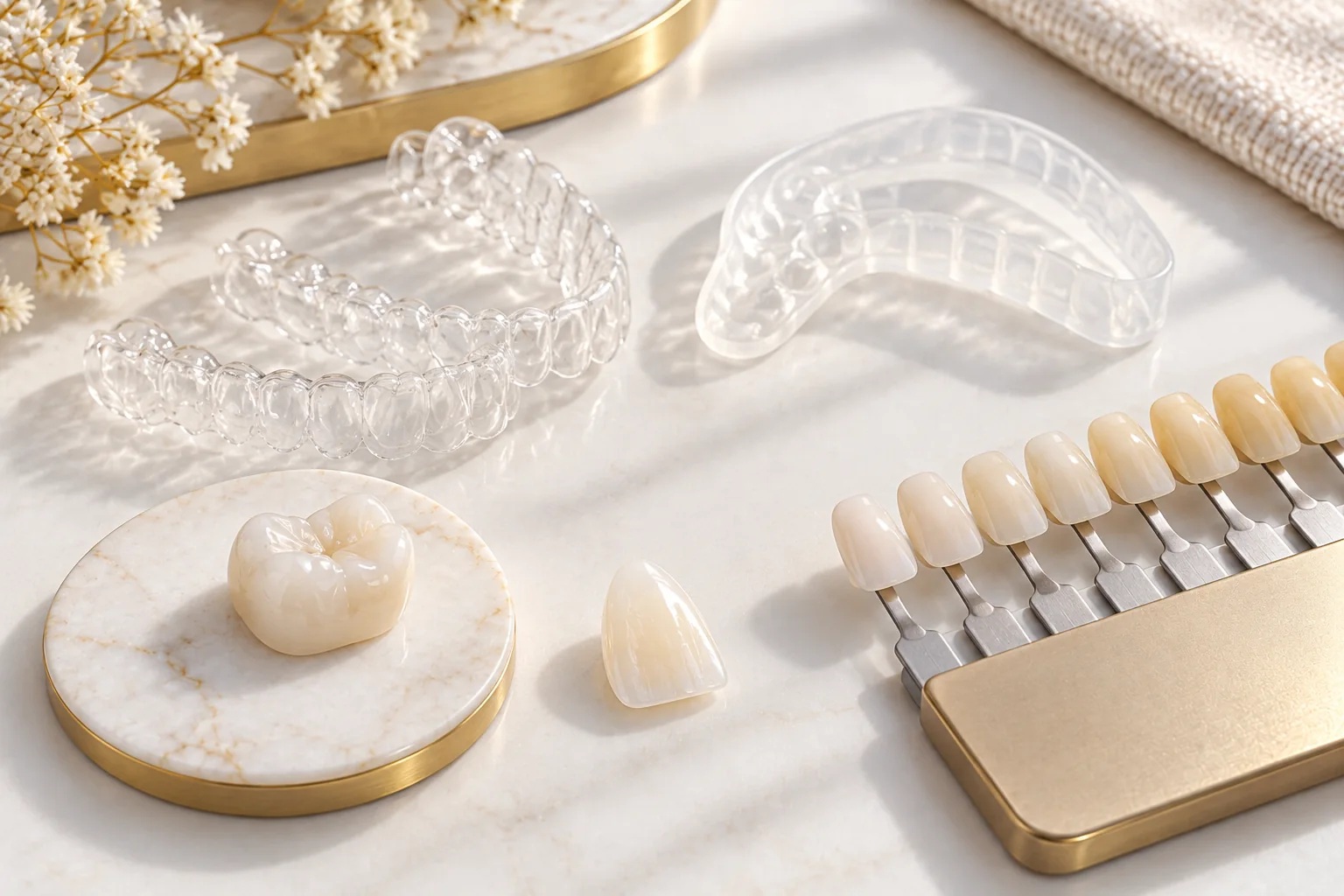
Which Treatment Fixes What?
Yellow or stained teeth
Start with whitening. If stains are deep or inside the tooth, bonding or veneers can cover them.
A chipped front tooth
Bonding for a small chip; a veneer or crown for a larger one.
Small gaps
Bonding or veneers for small spaces; aligners or braces if several teeth need to move.
Crooked or crowded teeth
Straightening first, then whitening or bonding if needed.
A missing tooth
An implant, a bridge or a partial denture.
Worn, short teeth
Bonding or veneers, and a night guard if grinding caused the wear.
Teeth Whitening: What to Know First
Whitening is the simplest cosmetic treatment, but it works best when your dentist checks your teeth first. The Canadian Dental Association on teeth whitening says people considering it should see a dentist to find the cause of the discolouration, especially if they have fillings, root canal treatment, crowns or very dark stains. Whitening doesn’t change the colour of fillings, crowns or veneers.
Sensitivity during treatment is common and usually passes, and the CDA notes the effect “is not permanent,” so many people touch up from time to time. The Ontario Dental Association on cosmetic dentistry also advises talking to your dentist before whitening at home.
What a Smile Makeover Involves
A smile makeover combines two or more treatments into one plan. A typical order is:
- A checkup and cleaning, with any cavities or gum problems treated first
- Straightening, if teeth need to move
- Whitening, so new work can be matched to your brighter shade
- Bonding, veneers or crowns to finish the shape and colour
Planning in this order avoids redoing work later, for example matching veneers to teeth you then whiten.
How to Choose a Dentist for Cosmetic Work
Because any general dentist can provide cosmetic treatment, ask how often they do the treatment you want and whether they’ll explain every option, including the simpler ones. A good plan should cover what each option involves, how long it lasts, what it costs, what your plan may cover and what happens if something needs repair. At our clinic, Dr. Karishma Phutela (Dr. Tina) has a special interest in cosmetic dentistry.
Cost and Insurance
Costs depend on the treatment, the number of teeth and the materials. Whitening and bonding sit at the lower end; porcelain veneers, crowns, aligners and implants cost more. Most dental plans treat purely cosmetic work as not covered, as the Canadian Dental Association on bonding and veneers notes, but treatment that also repairs damage, such as a crown on a cracked tooth, may be partly covered. Ask for a written estimate and a predetermination to your insurer before you start. See how direct billing works at our clinic.
Cosmetic Dentistry: Frequently Asked Questions
What is the most common cosmetic dental procedure?
Teeth whitening. It’s quick, non-invasive and often the first step before bonding or veneers.
Is cosmetic dentistry a specialty?
No. Cosmetic dentistry isn’t a recognized dental specialty in Canada. General dentists provide it, and some have a special interest in cosmetic work.
Is cosmetic dentistry covered by insurance?
Purely cosmetic treatment usually isn’t. Treatment that also repairs a tooth, such as a crown or bonding on a broken tooth, may be partly covered. Your dentist can send a predetermination to check.
What’s the cheapest way to improve my smile?
Professional whitening and bonding are usually the lowest-cost options. A checkup and cleaning can also make a visible difference by removing surface stains and tartar.
How long do cosmetic dental treatments last?
It varies: bonding typically lasts 3 to 10 years, veneers about 10 to 15 years, and whitening fades over time and needs touch-ups.
Ready to talk about your smile?
Book a consultation at River Run Dental Centre in Mississauga. We’ll check your teeth, explain your options and costs, and bill your insurance directly. Open 7 days, including evenings and Sundays.
Related Articles
- Veneer Teeth: What They Are, Types and Who They Suit
- Dental Bonding: How It Works, How Long It Lasts and When to Choose It