


 Written and medically reviewed byDr. Karishma Phutela (Dr. Tina)General Dentist · Updated
What Is Dental Bonding?
Dental bonding, also called tooth bonding, composite bonding or cosmetic bonding, is a way to repair or reshape a tooth using the same tooth-coloured resin used for white fillings. The Canadian Dental Association on bonding and veneers describes it as a way to make small cosmetic repairs with tooth-coloured resin, usually in one visit.
Because the resin is added to the tooth rather than replacing part of it, very little of your natural tooth is removed. That makes teeth bonding one of the most conservative options in cosmetic dentistry.
What Can Bonding Fix?
The Cleveland Clinic’s overview of dental bonding lists these common uses:
- Chipped or slightly cracked teeth
- Small gaps between teeth
- Uneven edges or teeth that look too short
- Some discolouration that whitening won’t lift
- Changing the shape of a tooth
The same resin is used for tooth-coloured fillings. If a tooth is badly broken or painful, see a dentist quickly: our emergency dental care page explains what to do.
The Bonding Procedure, Step by Step
- Shade matching: your dentist picks a resin shade that blends with your teeth.
- Preparing the surface: the tooth is lightly roughened and a conditioning liquid is applied so the resin sticks.
- Shaping: the resin is applied in layers and sculpted into shape.
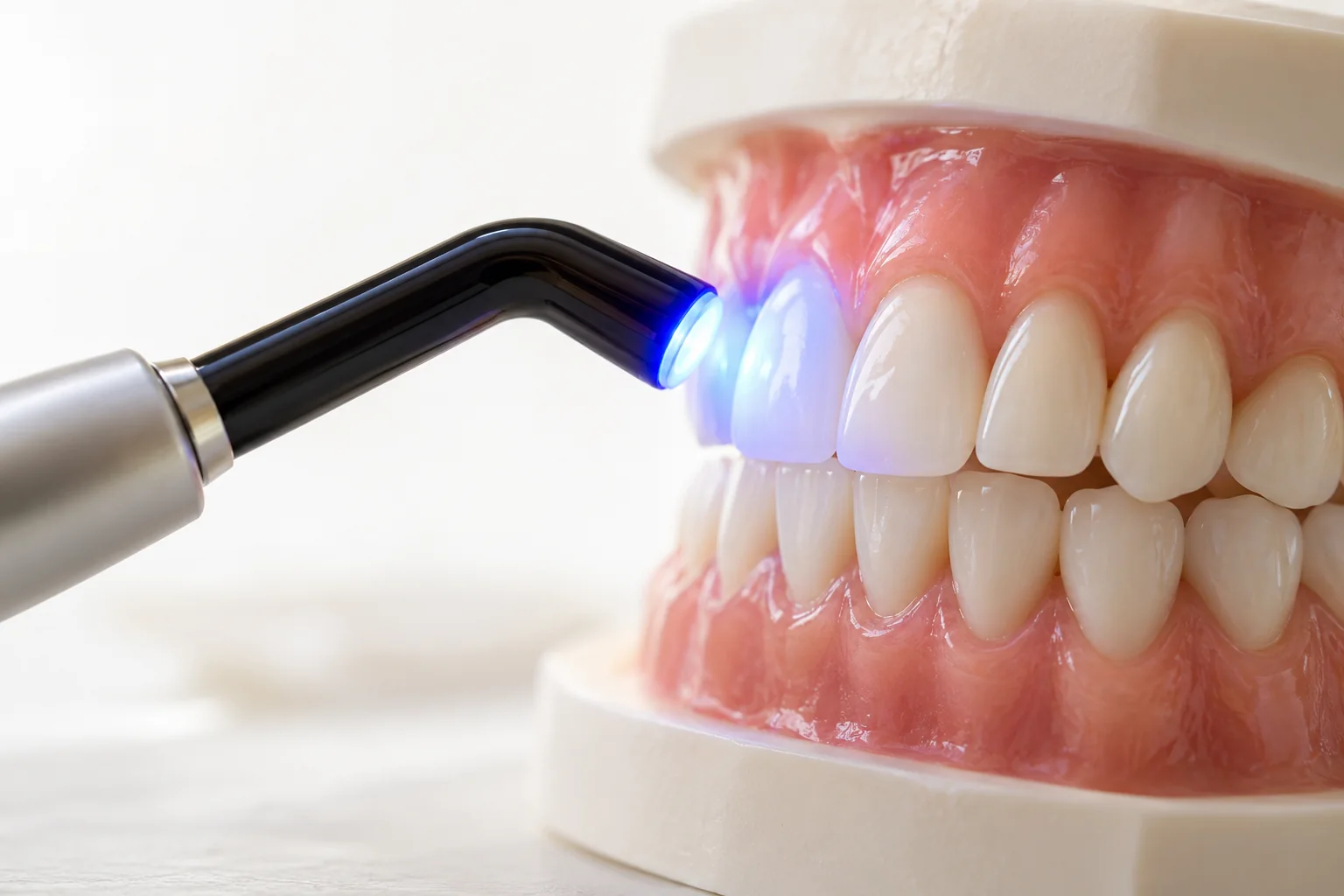
- Hardening: a special light sets each layer in seconds.
- Polishing: the bonding is trimmed and polished to match the shine of your enamel.
Each tooth takes about 30 to 60 minutes, according to the Cleveland Clinic’s overview of dental bonding. Most people don’t need freezing unless the bonding is filling a cavity or sits close to the nerve.
How Long Does Dental Bonding Last?
Bonding typically lasts between 3 and 10 years before it needs a touch-up or replacement, according to the Cleveland Clinic’s overview of dental bonding. How long yours lasts depends on where it is, how much you bite on it and your habits. Bonding on a biting edge wears faster than bonding on the side of a tooth.
To help it last:
- Brush twice a day with a soft brush and fluoride toothpaste, and floss daily
- Avoid biting nails, pens or ice, and don’t use your teeth to open packages
- Rinse with water after coffee, tea or red wine, since resin picks up stains
- Have it checked and polished at your regular cleanings
Pros and Cons of Tooth Bonding
Pros
- Usually done in one visit
- Little or no enamel removed, so it can be updated or reversed
- One of the least expensive cosmetic treatments
- Easy to repair if a small piece chips
Cons
- Stains more easily than porcelain
- Can chip over time
- Doesn’t last as long as veneers or crowns
- Best for small changes rather than a full smile makeover
Bonding vs Veneers
| Bonding | Porcelain veneers | |
|---|---|---|
| Visits | Usually one | Usually two or more |
| Enamel removed | Little or none | A thin layer |
| Lasts | About 3 to 10 years | About 10 to 15 years |
| Stain resistance | Lower | Higher |
| Cost | Lower | Higher |
| Best for | One or two small flaws | Changing colour and shape of several teeth |
Many people try bonding first and move to veneers later. Our guide to veneer teeth compares the types in more detail.
Is Bonding Covered by Insurance?
It depends on why it’s done. Purely cosmetic bonding is often not covered, as the Canadian Dental Association on bonding and veneers points out. Bonding that repairs a broken tooth or replaces lost tooth structure may be covered like a filling. Ask your dentist to check with your plan first. We direct bill most insurance plans, so you only pay your share.
Dental Bonding: Frequently Asked Questions
Does dental bonding hurt?
Usually not. Bonding adds material to the tooth rather than drilling it away, so most people don’t need freezing. You may feel some pressure while the tooth is shaped.
Can bonded teeth be whitened?
Whitening doesn’t change the colour of bonding. If you plan to whiten, do it first, then match the bonding to your new shade.
Is bonding reversible?
Often, yes. Because little or no enamel is removed, bonding can usually be polished off, repaired or replaced later.
How do I know if bonding or veneers is right for me?
Bonding suits one or two small chips or gaps. Veneers suit bigger changes to the colour and shape of several teeth. Your dentist can show you what each would look like on your teeth.
Can bonding fix a gap between front teeth?
Yes, small gaps can often be closed by adding resin to the sides of the teeth in one visit. Larger gaps may be better treated with clear aligners or braces.
Ready to talk about your smile?
Book a consultation at River Run Dental Centre in Mississauga. We’ll check your teeth, explain your options and costs, and bill your insurance directly. Open 7 days, including evenings and Sundays.
Related Articles
- Veneer Teeth: What They Are, Types and Who They Suit
- Broken Tooth: What to Do Right Away and How It’s Fixed